In a Navajo Community Scarred by Uranium, a New Mining Boom Arrives
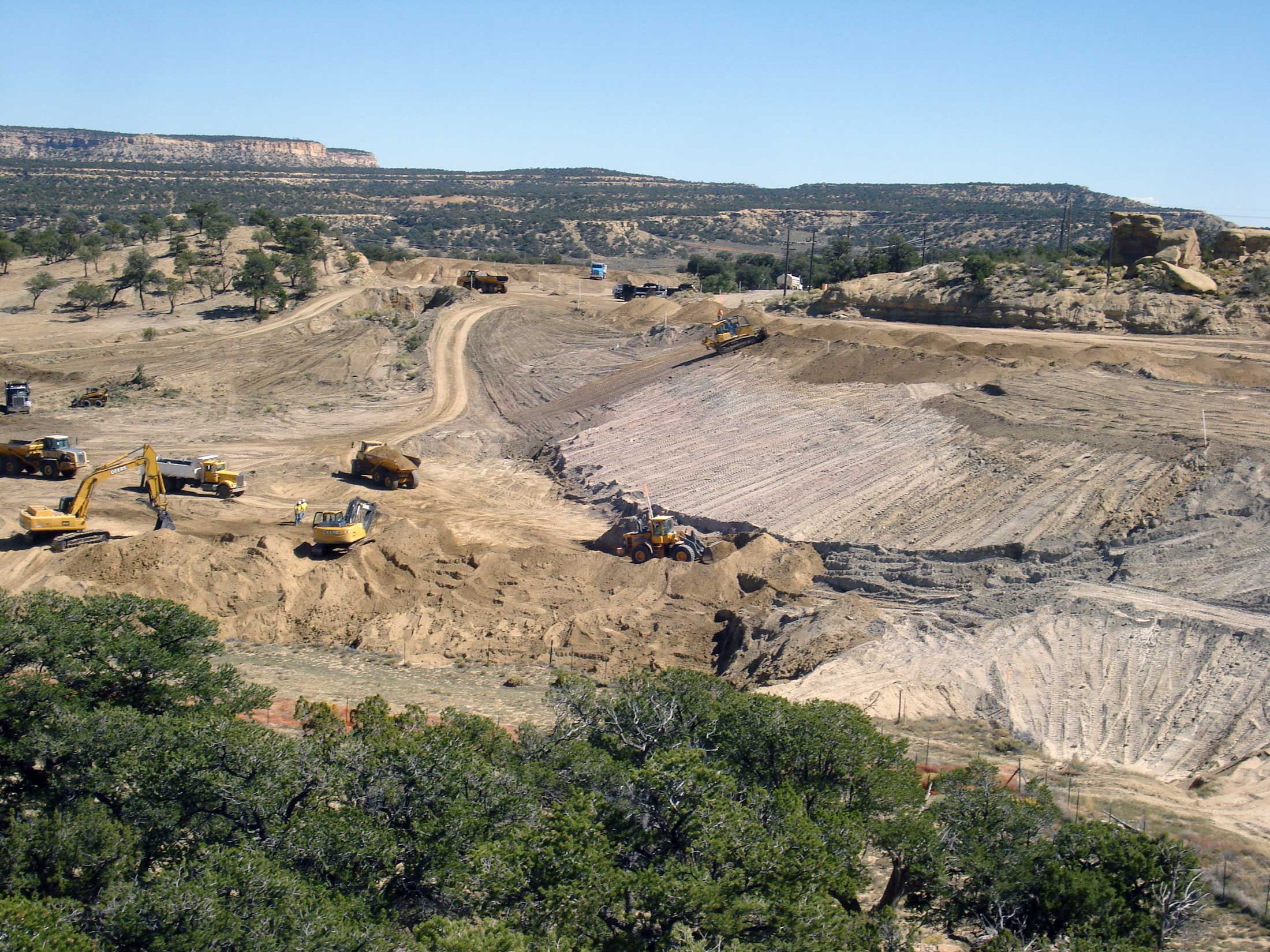
On the evening of August 6, 2026, at a public hearing in a casino conference room outside Gallup, a company called NuFuels unveiled plans to mine uranium near Church Rock, in northwestern New Mexico.
The proposed project—the Church Rock Section 8 ISR Project—is located on a 175-acre swath of private land surrounded on all sides by the Navajo Nation, which banned uranium mining and processing on its lands in 2005. If the project is approved, the company will drill a field of wells into the sandstone aquifer beneath the site and inject it with a chemical solution to dissolve uranium out of the rock and into the groundwater, a method called in-situ recovery (ISR). Other wells will pump the uranium-laden water back to the surface, where the uranium will be extracted and converted into a concentrated powder called yellowcake, which will be further refined into fuel for nuclear power plants—or nuclear weapons. The company expects to pull about a million pounds of uranium a year from this one site, part of a deposit it estimates at more than 10 million pounds. The aquifer it aims to mine supplies drinking water to nearby Diné (Navajo) communities.
In a petition to intervene in NuFuels’ federal license-renewal case, the New Mexico Department of Justice argued that in-situ recovery has never been shown to restore groundwater to its natural, pre-mining state—and that the technology to do so does not yet exist. The petition points to NuFuels’ own words in a 2023 filing, in which the company conceded that “to date, no ISR site has restored all groundwater constituents of concern to pre-operational concentrations.”
Nevertheless, at the hearing, NuFuels vice president Josh Leftwich assured the room that the mine’s design is sound, according to Source New Mexico. “It’s a closed-loop system,” he said. “There won’t be any other discharges. The water just circulates through the formation to extract the uranium.”
The people in that room had heard promises about uranium before. From 1944 to 1986, mining companies extracted an estimated 30 million tons of uranium ore from the Navajo Nation, leaving behind a devastating environmental and human health legacy. To this day, more than 500 abandoned uranium mines remain scattered across the reservation. Most of them have never been remediated. And now, as the Trump administration races to revive the U.S. nuclear power industry, uranium mining companies are encroaching on Navajo lands once again.
As Source New Mexico’s Patrick Lohmann reported, the hearing did not go the company’s way. Partway through Leftwich’s presentation, a Diné advocate named Jenn Nez rose from her seat, walked to the front of the room, and asked Leftwich to hand over his microphone. With tears in her eyes, she spoke of the contamination that uranium mining has already brought to her community, of the cancers and illnesses among her family members and friends. Leftwich didn’t get the microphone back. For most of the next 90 minutes, the hearing belonged to those who had come to oppose the mine—one after another rising to say, in their own words, that they had lived this before.
Among them was Teracita Keyanna, who was born and raised just a few miles from the proposed mine site, in a community that has spent more than four decades living with the consequences of the uranium already pulled from this ground.
“This is my community,” she told Leftwich. “This is my family. That’s my home you’re talking about.”
* * *
Keyanna’s home is called Red Water Pond Road. As the crow flies, it sits about 3.8 miles northeast of the proposed mine site, on the Navajo Reservation. “It’s a small community of blood relatives,” Keyanna says. The few dozen people who live along this dirt road in the high desert north of Church Rock “are all descendants from the same bloodline.”
The community is surrounded by abandoned uranium mines. To the south is the Northeast Church Rock Mine, which United Nuclear Corporation operated from 1967 to 1982, pulling some 3.5 million tons of ore from shafts that ran more than a thousand feet deep—the second-largest uranium mine on the Navajo Nation. To the north are the Kerr-McGee Quivira mines, worked from 1974 to 1985. Less than a mile down the road is the shuttered mill that once processed the ore. About a mile upstream along Pipeline Arroyo—a usually dry wash that runs through the Red Water Pond Road community and drains into the Puerco River—sits the source of one of the worst radioactive disasters in U.S. history.
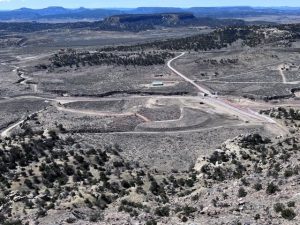
The Quivira mines, just north of the Red Water Pond Road community. (U.S. Environmental Protection Agency)
Some of the elders are old enough to remember what life was like, before the mines. Bertha Nez, Keyanna’s aunt, was just a child when the exploration began. She was born in 1946. She spent her childhood herding sheep. She spent her summers living with her family in a hogan home that her grandfather had built down the canyon. “There were birds,” she told the Navajo Times in 2024, “hummingbirds all around.”
Then, one day, the trucks came, carrying white men and mining equipment. The men drilled holes in Nahasdzáán, Mother Earth. They discovered leetso—“yellow dirt.” They built mines, and sent the Diné to work in them. The workers were paid something like $1.60 an hour. They worked deep underground, in shafts with little to no ventilation. Most were never warned about the dangers of radiation.
“A number of our people were uranium miners,” says Robyn Jackson, executive director of Diné C.A.R.E., a Diné environmental group and A2 member. “And at the time they weren’t fully informed about the impacts of radiation. And then their spouses, their children, were also contaminated just from the miners coming home”—in clothes still caked with dust from the mines.
Things went on like this for decades—at Church Rock and across the Navajo Nation.
Then, on the morning of July 16, 1979, came the disaster that should have made Church Rock a household name. Before dawn, around 5:30 a.m., the earthen dam holding back United Nuclear Corporation’s tailings disposal pond cracked open. Roughly 94 million gallons of radioactive effluent—about as acidic as battery acid—poured into Pipeline Arroyo and rushed down the Puerco River, traveling more than 80 miles through communities that were almost entirely Diné, including the Red Water Pond Road community. To this day, it remains the largest accidental release of radioactive material in U.S. history. By some measures, it released more radiation than the Three Mile Island meltdown, which happened only four months earlier.
Three Mile Island became a national reckoning. Church Rock became a footnote. The Centers for Disease Control and Prevention (CDC) tested six people for radiation in the aftermath of the Church Rock spill, and concluded that downstream communities weren’t at risk. No jurisdiction ever declared it a disaster. United Nuclear removed about 3,500 tons of contaminated soil—an estimated one percent of what the spill left behind.
“When Three Mile Island happened, and it wasn’t even the same volume, there was national coverage,” Keyanna says. “For our community, it was like we had been overlooked.”
Forty-seven years later, the tailings from that spill are still there. So are the tailings and waste rocks of the other mines and mills surrounding the Red Water Pond Road community, which were abandoned in the 1980s, after the uranium boom went bust. Those tailings and waste rocks have been leaching heavy metals and emitting radiation into the community’s air, water, and soil ever since.
Residents have long suspected that this contamination is making them sick. Several community members have passed away from respiratory illnesses, Keyanna says: asthma, COPD, pulmonary fibrosis. Many of them were living near old ventilation shafts that were never properly plugged. Several community members have dealt with—or are dealing with—cancer.
Keyanna’s own son was born with a hole in his heart. When her daughter was three, she began to develop nodules beneath her skin, near her lymph nodes—growths that needed to be cut out and sent to a lab. By the time she was eleven, she had endured four surgeries. “It’s always been tough as a parent,” she says, “to have to sit there and wait for the news, especially from pathology.”
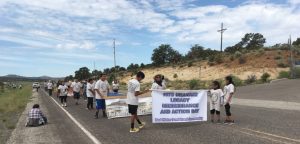
Red Water Pond Road residents march in commemoration of the 1979 Church Rock spill. (Multicultural Alliance for a Safe Environment)
In 2007, the community came together to form the Red Water Pond Road Community Association. Keyanna serves as vice president of the organization’s executive committee. The group has been fighting to rid their home of this toxic, radioactive waste for nearly two decades. And cleanup is finally arriving. But it is arriving slowly, unevenly, and on terms the community didn’t choose.
On one side of the road, a genuine victory. In January of last year, before Trump took office for his second term, the Environmental Protection Agency (EPA) agreed to haul the waste from the old Quivira mines off the reservation entirely, to a licensed disposal site. It was the first time the agency had chosen full removal over capping the waste in place on the Navajo Nation. Eric Jantz, an attorney for the New Mexico Environmental Law Center, called it “a seismic shift in policy for Indigenous communities.” Keyanna calls it “something of a win.” The EPA plans to remove one million cubic yards of radioactive waste from the site, but the cleanup has yet to begin.
And on the other side of Red Water Pond Road, at the Northeast Church Rock mine, a $62 million remediation project broke ground this summer, in August. This waste isn’t leaving the community, however. It is being moved, in Keyanna’s words, “basically across the street,” onto the old United Nuclear mill site down the road. “It’s against the community’s wishes,” Keyanna says. “But at least it’s not in the immediate area of a lot of the residential areas.” Transport of the waste is expected to begin this winter.
“Relocating the waste to a modern, engineered repository is a significant improvement over leaving it at the former mine site,” Stephen Etsitty, executive director of the Navajo Nation EPA, said in a statement last month. “At the same time, we recognize that the community has consistently called for the waste to be removed from the Navajo Nation altogether. As technology advances, we remain open to future solutions that provide even greater protection for our people, our groundwater, and future generations.”
* * *
This is Teracita Keyanna’s community. This is where her family has been living for generations. This is her home we’re talking about, and it’s only just beginning to be cleaned up.
And this is where, last month, on August 6, at that public hearing in that casino conference room outside Gallup, NuFuels announced plans to start mining again.
“They [NuFuels] keep saying that ISR isn’t a form of mining,” Keyanna says. “But it is.” The industry keeps claiming that nuclear power is clean, “but they’re not looking at the very beginning,” Keyanna says, “where the actual mining of the ore takes place.”
NuFuels did not respond to requests for comment.
The company’s Church Rock Section 8 ISR Project is currently open for public comment.
Newsletter Sign Up
Don’t miss any of our newsletters!

