

The Noowuh Knowledge Center was founded in 2019 to preserve Newe (Western Shoshone) culture, language, and connection to Native lands. From 1951 to 1992, the federal government conducted more than 900 nuclear weapons tests within the Newe Sogobia homeland in Nevada, exposing downwind communities to radiation linked to cancer and early death. In recent decades, large-scale gold and lithium mining operations and plans for a Yucca Mountain nuclear waste repository have advanced without tribal consent. Noowuh works with Shoshone and other Native communities to document local history and defend the region’s land and water from environmental harm. Its programs include oral history archiving, research on environmental and social justice, cultural classes and events, public forums, and demonstrations. By creating space to teach, learn, and share, the Noowuh Knowledge Center counters cultural erasure and land exploitation, ensuring that Newe traditions and wisdom continue to benefit future generations.
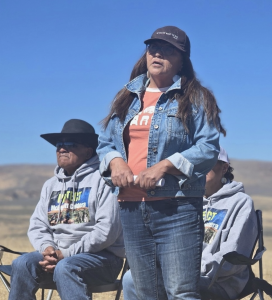
Noowuh Knowledge Center’s Mary Gibson speaking outside the Thacker Pass lithium mine. Photo provided by Noowuh Knowledge Center.
Noowuh is led by a six-member volunteer board, all Shoshone, and operates without paid staff. The group’s annual Ruby Valley Treaty Conference draws up to 150 participants to examine treaty rights, environmental threats, and community health in the region. The center also hosts storytelling events, language workshops, Native author talks, and cultural programs where participants learn traditional songs and dances, beading and basket weaving, and how to hunt and harvest food and medicinal plants. “Our culture is tied to our landscape. If we don’t know our language and songs and prayers, we can’t talk about our land and water. It’s all related,” said Noowuh’s Executive Director Mary Gibson. A recent walk with the ancestors along the Ruby Crest Trail brought community members onto historic migration routes. Noowuh is working to digitize its archives and expand access to its library of 400 books and other cultural materials so that more Newe can learn from the past and carry it forward.
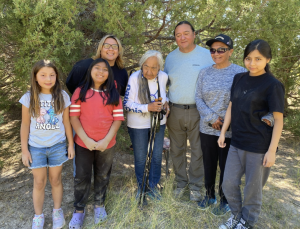
A group at Bahsahwahbee (Swamp Cedars), a sacred site for Western Shoshone in White Pine County, Nevada. Photo: Mary Gibson.